Project context
Overview
PhageX explores how a safety system could interrupt a pig-butchering scam before emotional dependence becomes financial loss. I focused on young adults aged 25–35 and treated the work as a service and interaction-design problem, not only a detection problem.
The outcome is a dual-platform concept: smart glasses surface risk in the moment, while a paired phone can archive evidence, notify trusted contacts, and execute a high-risk lock protocol.
Research direction
Key Insight
A 50-minute focus group with five digital-native professionals showed that scam awareness was high, yet direct or close-contact impact was still common. Mapping the full journey revealed that the harm develops through repeated trust-building rather than a single suspicious transaction.
The intervention cannot wait for the payment screen. It has to interrupt the emotional script—and appear outside the mobile channel already controlled by the scammer.
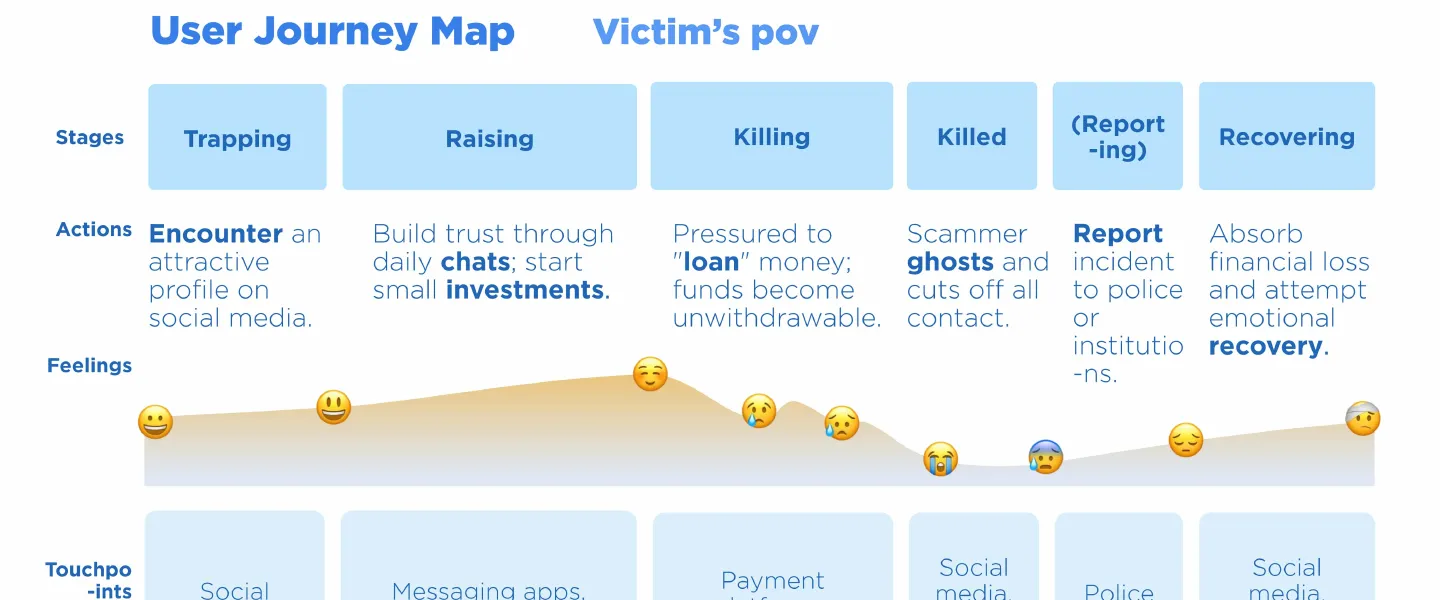
What shaped the work
Design Decisions
I compared a smart charger, a gamified phone app, and smart glasses. The glasses direction offered a first-person viewpoint, real-time response, and an intervention layer outside the compromised phone. That advantage came with clear constraints: battery life, false positives, public-camera trust, and the need to keep sensitive analysis on-device.
System view
Capture, analyze, intervene, enforce
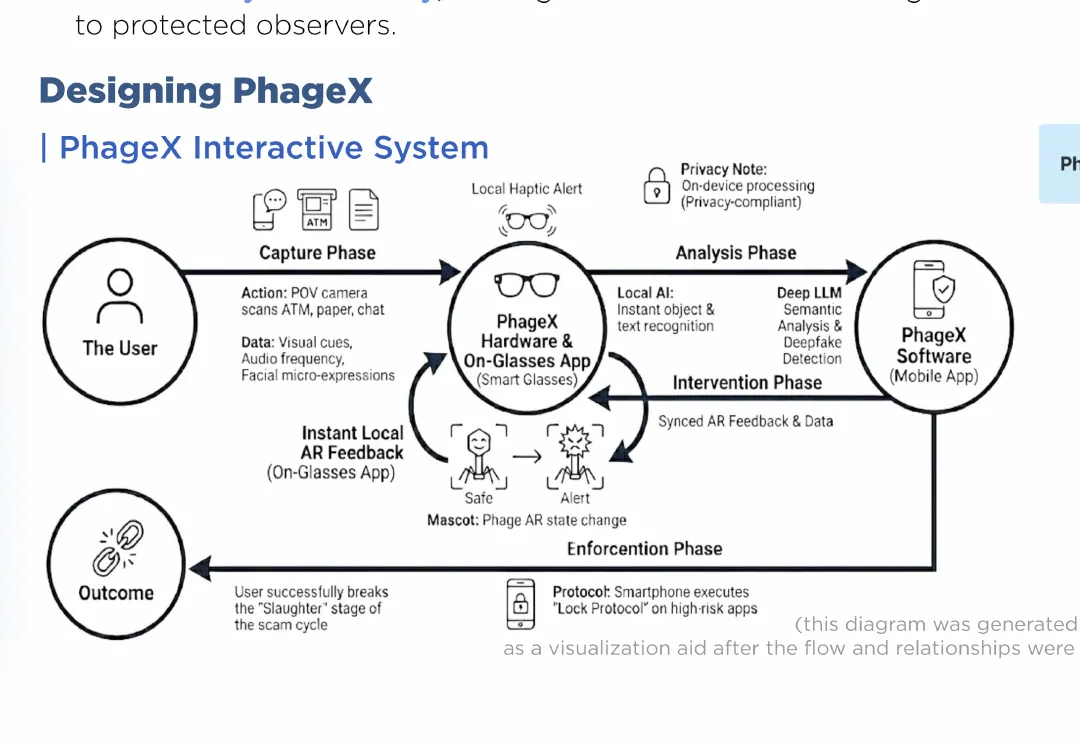
Process
Observe text, voice, and visual cues from the user’s point of view.
Assess manipulation patterns locally and surface confidence carefully.
Shift the guardian from a calm presence to an unmistakable risk state.
Escalate to trusted contacts, evidence capture, or a phone lock protocol.
How it works
Prototype & Experience
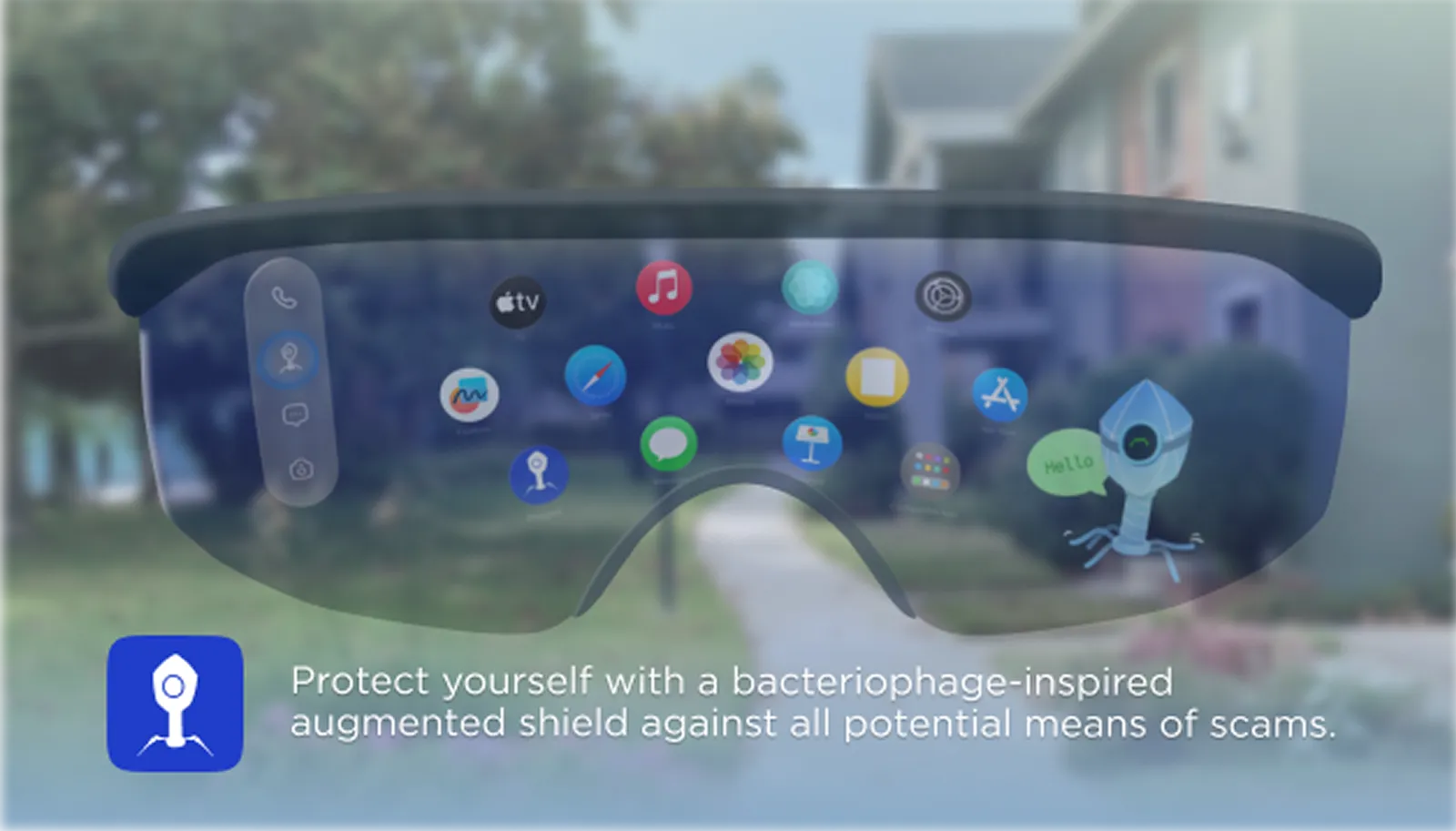
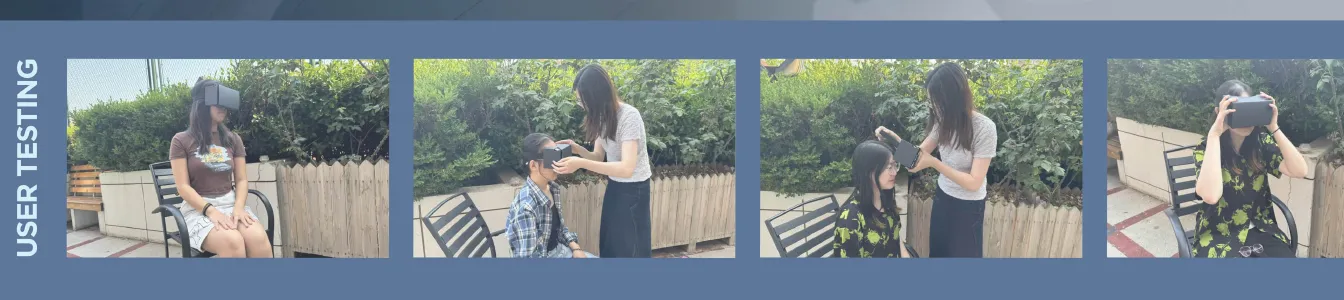
The experience was simulated with Google Cardboard and video post-production. This made the first-person timing testable without claiming a working detection model or production smart-glasses hardware.
Monitoring state
Intervention state
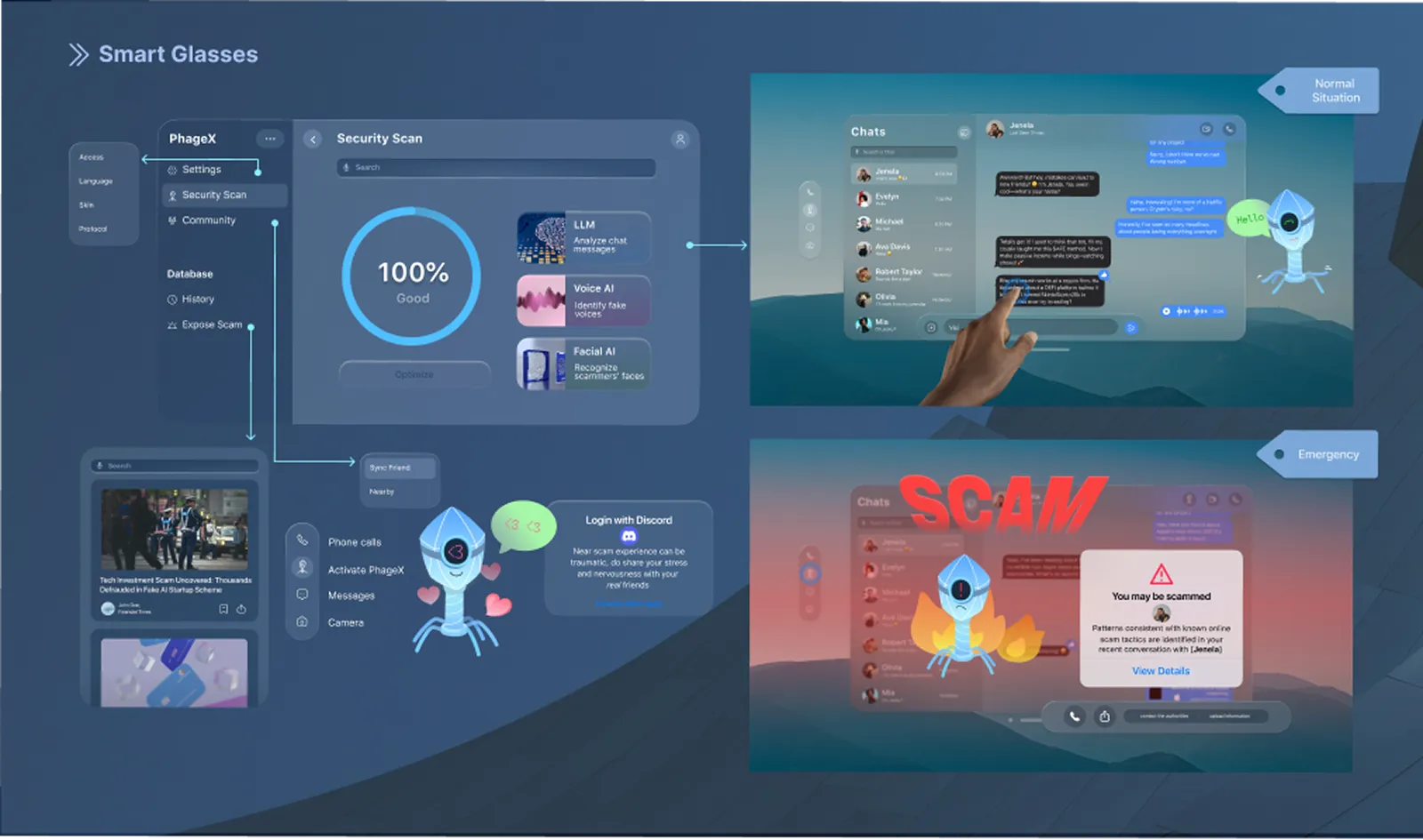
What changed
Outcome & Reflection
Participants found the simulated experience realistic and practical. They also wanted the guardian to remain visible and questioned continuous camera use in public. Those reactions moved privacy and system transparency from secondary concerns into core experience requirements.