Project context
Overview
The Reading Pensieve asks whether emerging interfaces can support deep reading without turning the book into another screen. The concept overlays optional notes, bookmarks, and memory cues around a paper book, then uses spaced review to help readers revisit what mattered.
Research direction
Key Insight
Four reader interviews showed that paper’s value was not nostalgia alone. It supported attention, tangibility, long-term memory, and critical thought. Readers still wanted portability, flexible interaction, and easier ways to return to meaningful passages.
The digital layer should arrive only when it helps the reader remember or reflect—and disappear when it competes with the page.
What shaped the work
Design Decisions
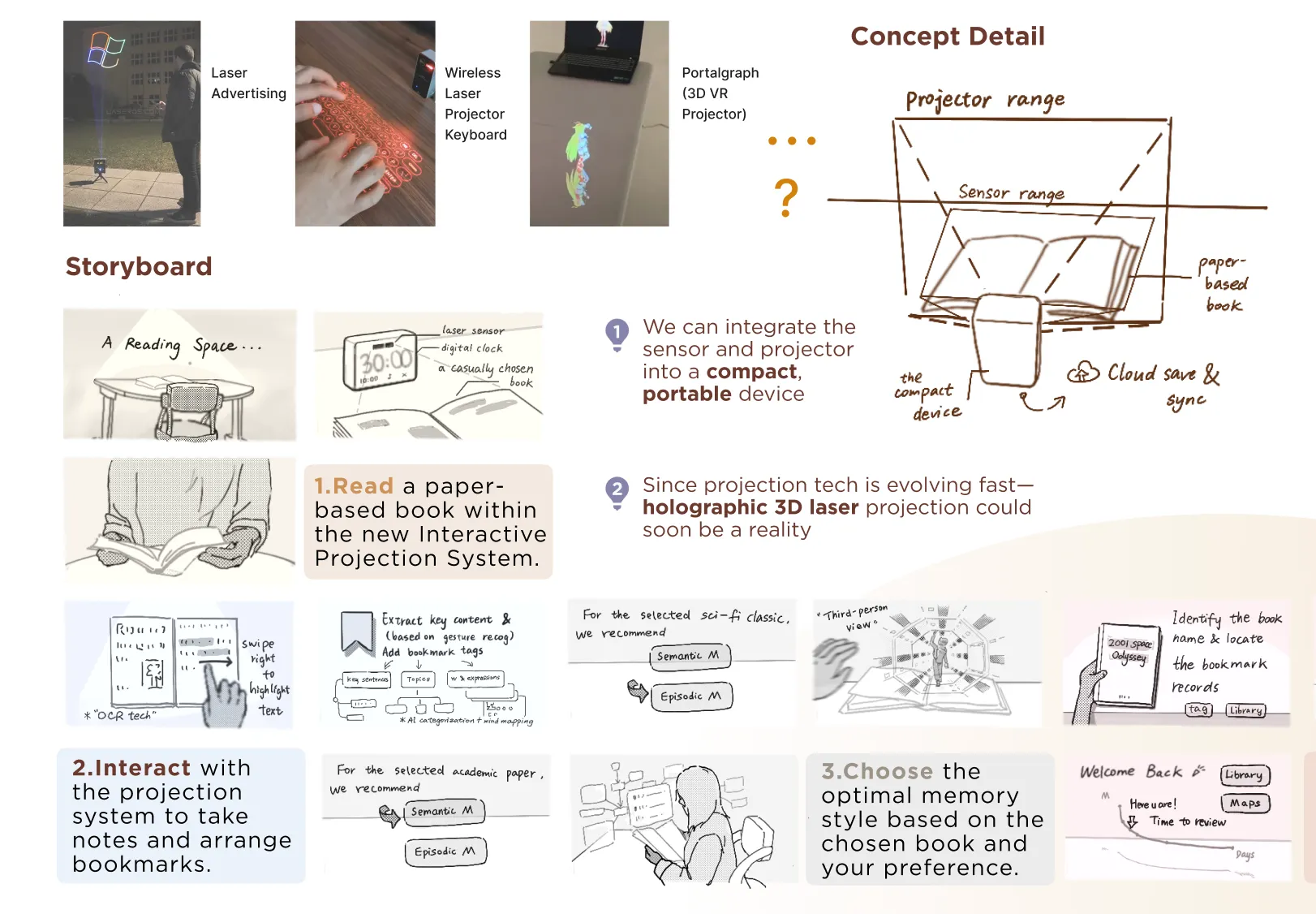
I kept the physical book as the primary object and organized the concept around gesture rather than a permanent screen. A compact projector and sensor would recognize the book area, support lightweight annotation, and sync saved material for later review. Holographic laser projection remains a speculative future form factor, not a solved implementation.
How it works
Prototype & Experience
The bookstore prototype used video compositing to make the spatial behavior visible: a reader opens a paper book, summons supporting material with a gesture, and dismisses the layer to continue reading. This tested the rhythm of the experience, not the feasibility of a holographic display.
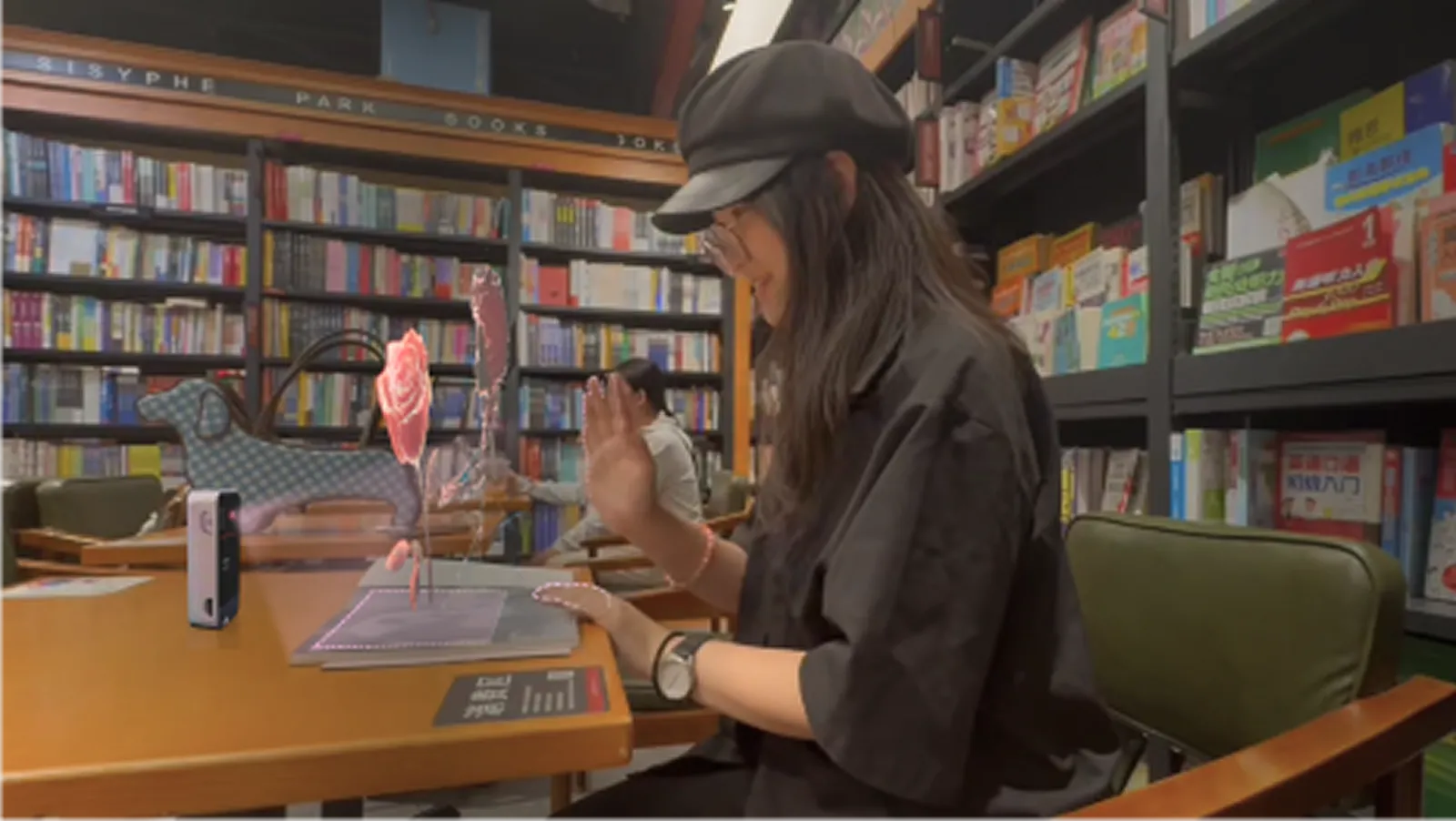
Watch the Reading Pensieve experience walkthrough on YouTube.
What changed
Outcome & Reflection
The concept is strongest as a critique of attention-heavy reading tools and weakest where it depends on future projection hardware. A functional next step would use an available tabletop projector to test gesture discoverability, annotation accuracy, and whether review prompts genuinely support recall.