Project context
Overview
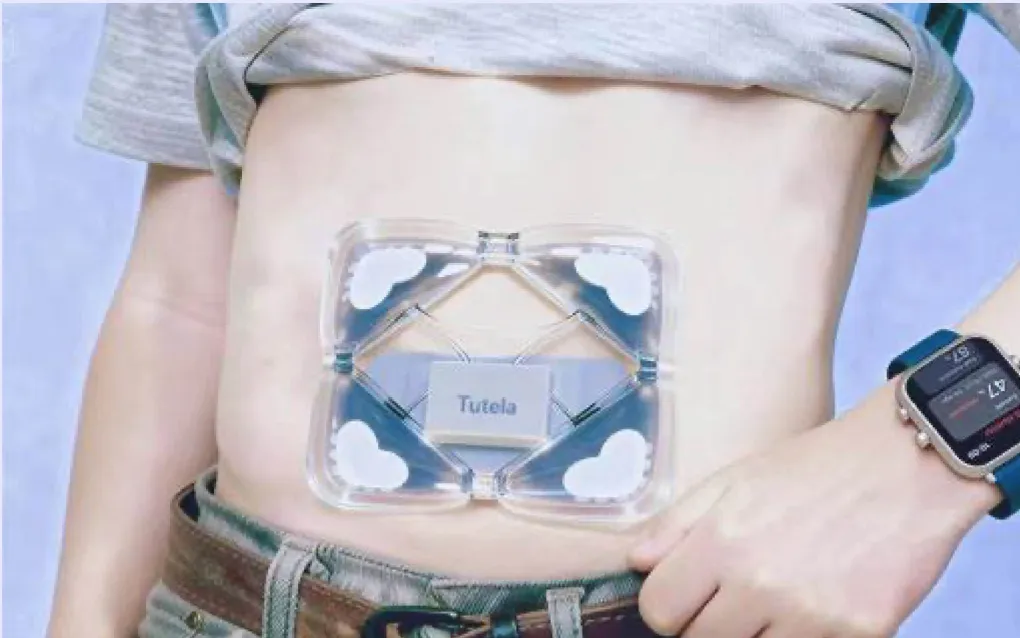
Tutela explores how a wearable device could support teenagers living with irritable bowel syndrome without making a private condition more visible. The concept combines stress-related sensing with heat and pneumatic relief in a discreet abdominal patch connected to a smartwatch.
Research direction
Key Insight
The central design requirement was discretion. Support needed to work under clothing, fit everyday school routines, and give the wearer control over when relief or alerts appeared instead of publicly signaling a health condition.
A health wearable can only feel supportive when the user controls its visibility, timing, and intensity.
What shaped the work
Design Decisions
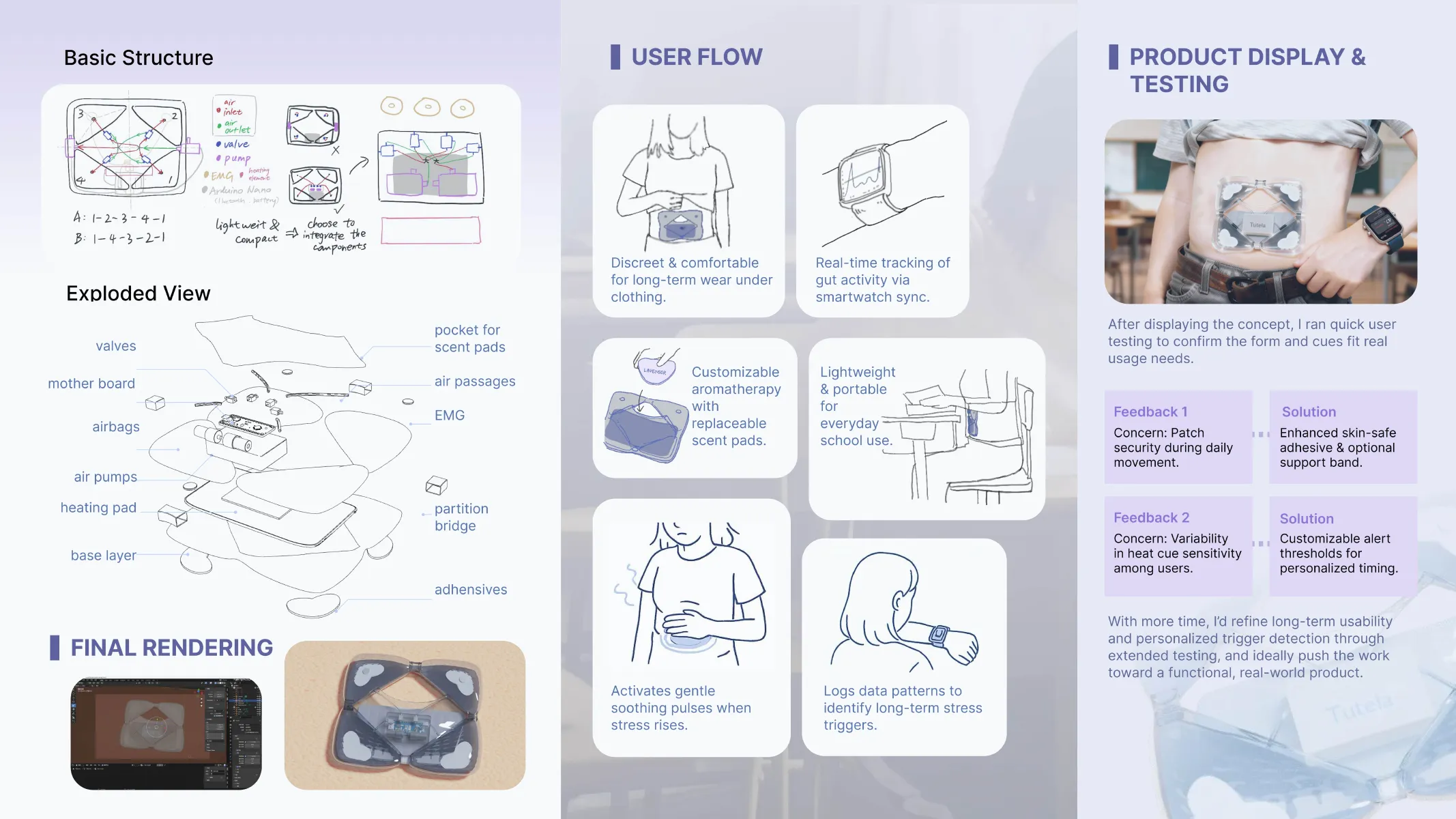
I organized the system around a lightweight adhesive patch and a connected smartwatch. The patch combines sensing, heating, air passages, and pneumatic chambers, while the watch handles status feedback and adjustable alert thresholds. Replaceable scent pads were explored as an optional calming cue, not a required part of the core interaction.
How it works
Prototype & Experience
The physical prototype was used to examine component placement, pneumatic behavior, and how the form could sit beneath clothing. Early user feedback highlighted two practical risks: security during movement and differences in heat sensitivity. These findings led to a skin-safe adhesive or support band and personalized thresholds as the next design priorities.
What changed
Outcome & Reflection
The project demonstrates a tangible interaction direction, but it does not yet establish reliable long-term sensing or wear. The next step would be an extended study of comfort, attachment, personalized triggering, and safety before treating the concept as a real health product.